
Kagan and Soai win the 2026 chemistry Nobel for making molecules choose a handedness
The laureates showed how tiny molecular imbalances can be amplified until a reaction strongly favors one mirror-image form, advancing asymmetric synthesis and the chemistry behind medicines.
The story
Henri B. Kagan and Kenso Soai have won the 2026 Nobel Prize in Chemistry for discoveries that showed how chemical reactions can amplify a preference for one molecular mirror image. The Royal Swedish Academy of Sciences awarded the prize for the discovery of non-linear effects and autocatalysis in asymmetric organic synthesis. Kagan, professor emeritus at the former Université Paris-Sud, and Soai, professor emeritus at Tokyo University of Science, will share 12 million Swedish kronor.
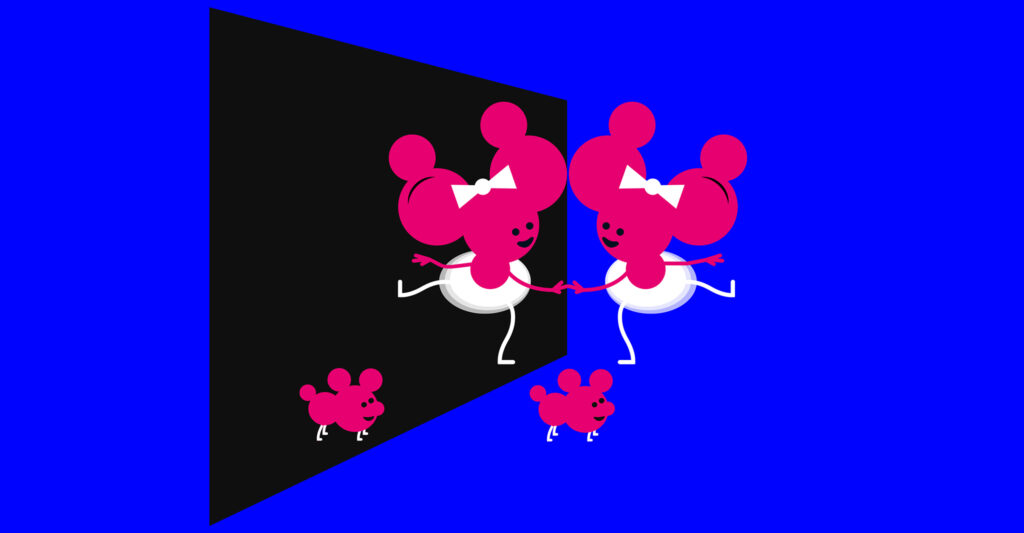
The problem begins with chirality. Some molecules occur in two forms that contain the same atoms and bonds but cannot be superimposed, much as a left hand cannot be placed exactly over a right one. Chemists call the two forms enantiomers. The distinction is not merely geometric: biological receptors and enzymes are three-dimensional, so two mirror-image molecules can interact with them differently. Making the intended enantiomer is therefore a central task in pharmaceutical chemistry and in the production of fragrances, flavors and advanced materials.
Life adds a deeper puzzle. Amino acids can exist in mirrored forms, yet proteins overwhelmingly use one handedness. Sugars in DNA and RNA also show a consistent handedness. This homochirality raised a long-running question: if ordinary laboratory reactions tend to produce equal quantities of both mirror images, how could a small initial imbalance become an almost exclusive preference?
Kagan supplied a decisive part of the answer in 1986. His team found that the relationship between the handedness of a catalyst and the handedness of the product did not always scale proportionally. A catalyst with only a modest excess of one enantiomer could create a substantially larger excess in the product. The result, known as a non-linear effect, overturned the simple expectation that a partly mixed catalyst would yield a comparably mixed output. It showed that interactions among catalyst molecules could amplify asymmetry.
Soai then demonstrated a more dramatic feedback mechanism. In a 1995 publication, his group described a reaction in which a chiral product catalyzed the formation of more of itself. The process is asymmetric autocatalysis: whichever mirror-image product gains an early advantage helps reproduce that same form. By 2003, the team had presented a reaction that produced only one of the two possible mirror images, according to the Academy. The experiment provided a concrete chemical route from a tiny imbalance to near-complete homochirality without relying on biology.
The laureates' contributions are complementary rather than a single continuous invention. Kagan revealed that asymmetric catalysis can respond non-linearly to a catalyst's composition; Soai built a reaction in which the product participates in its own multiplication. Together, the ideas made amplification—not only selectivity—the central insight. The American Chemical Society said the work gave chemists unprecedented control over molecular handedness and enabled advances in medicines and materials.
The pharmaceutical importance should be stated precisely. Kagan and Soai did not invent every modern method for producing a single enantiomer, and the Nobel citation is not a claim that one reaction is used in all drug factories. Their discoveries supplied foundational concepts for understanding and designing highly selective reactions. That knowledge can reduce unwanted mirror-image material and the burden of separating a mixture after synthesis, although the route chosen for any medicine still depends on cost, scale, safety and the molecule itself.
INNOVOX analysis: the most important innovation here is chemical positive feedback. In conventional process thinking, a small impurity or imbalance is often something to suppress. These discoveries showed that a carefully designed molecular system can use a small asymmetry as information and reinforce it. That principle connects two different ambitions: efficient control in industrial synthesis and an experimentally testable explanation for how a one-handed chemical world could emerge from nearly balanced beginnings.
The Nobel decision also highlights the long time horizon of foundational chemistry. Kagan's defining non-linear-effect paper appeared four decades before the award, while Soai's autocatalytic work matured across the 1990s and early 2000s. Applications and mechanistic understanding accumulated through many laboratories after the original experiments. The prize therefore rewards discoveries whose value became clearer as other chemists tested, generalized and used them.
The next frontier is breadth. The Soai reaction remains unusually powerful, but researchers continue to ask how many other reaction networks can reliably amplify a tiny chiral bias and what realistic physical events could provide the first bias. For industry, the benchmark will be catalytic systems that combine high selectivity with abundant inputs, recyclable catalysts and fewer purification steps. For origins-of-life chemistry, the harder test is reconstructing a plausible sequence from prebiotic molecules to the uniform handedness found in cells.
INNOVOX analysis
The prize recognizes a control principle rather than a single commercial molecule. Kagan and Soai showed that chirality can behave as a feedback system: a slight starting preference can be magnified, and a chiral product can help make more of itself. That makes the work important both to practical synthesis and to the deeper question of how an initially small asymmetry could become dominant in living chemistry.
What to watch
Watch how researchers extend asymmetric autocatalysis to broader reaction families and whether experiments can connect plausible prebiotic starting conditions to the strong single-handedness seen in biology. In manufacturing, the practical test is whether new catalytic systems deliver one desired enantiomer with less waste, lower energy use and fewer purification steps.